Ask an AI assistant a simple buying question — “what’s a good magnesium supplement for energy and sleep?” — and you’ll get a confident answer. Three brands, clear reasoning, even a breakdown of the different types of magnesium and what each is good for. It’s a better experience than scrolling to page two of Google, which is what product research used to be.
Then do the thing most people never do: check who made the list, and why.
Run that test across categories and a pattern emerges quickly. Brands with well-structured product data — proper specs, comparison information, clear attributes a machine can parse — appear. Brands whose catalogues are beautiful but unstructured barely scrape in, however large their marketing budget. And dozens of genuinely good brands in every category appear nowhere at all. Not ranked low. Absent.
The uncomfortable implication
The AI isn’t recommending the best products. It’s recommending the products it can understand.
That distinction matters more than most ecommerce teams realise. Twenty years of optimisation effort has gone into Google — backlinks, domain authority, keyword coverage — and it worked. But AI assistants don’t read the web the way a search crawler ranks it. A language model doesn’t care about your PageRank. It cares about whether it can parse your product information well enough to stake a recommendation on it.
The pattern repeats in category after category. Wetsuits: some brands appear with detailed reasoning about neoprene thickness, seam construction and thermal lining, while brands with excellent products are simply missing — not because the products are worse, but because the assistant couldn’t find enough structured information to recommend them with confidence. Beauty: brands with properly structured ingredient lists, skin-type matching and clear attributes show up; brands hiding everything behind lifestyle imagery and “discover your glow” messaging are invisible. Cycling kit, electronics accessories, home goods — the same gap, over and over.
It’s not about brand size. It’s about data structure.
This is the part that should get your attention. Some of the brands assistants recommend are relatively small — they just built their catalogues properly. Some of the brands assistants ignore are household names spending millions on advertising.
The ad spend is irrelevant to the model. The Instagram following is irrelevant. What matters is whether an AI system can look at your product data and understand what you sell, who it’s for, and why someone should buy it.
And the shift is happening at scale. Traditional search volume is falling as AI referrals to retail sites grow at extraordinary rates, and shoppers increasingly start purchase research inside an assistant rather than a search box. People haven’t stopped shopping — they’ve stopped starting every purchase on Google.
The economics of visibility change with it. On a Google results page you had ten organic slots to aim for. In an AI answer you have perhaps two or three mentions. Possibly zero. The competition for visibility hasn’t just moved — it has concentrated.
What to do about it
Most brands have no idea this gap exists, because they’re still measuring success by Google rankings and return on ad spend. Meanwhile a growing share of their potential customers are asking assistants what to buy and getting answers that don’t include them.
The starting point costs nothing: ask ChatGPT or Perplexity to recommend products in your category, without your brand name in the query. If you’re not in the answer, the fix isn’t more content or more ads — it’s making your product information structured, specific and consistent enough for a machine to understand. That’s the discipline GEO exists for, and it’s what Geoffy does for Shopify and WooCommerce stores.
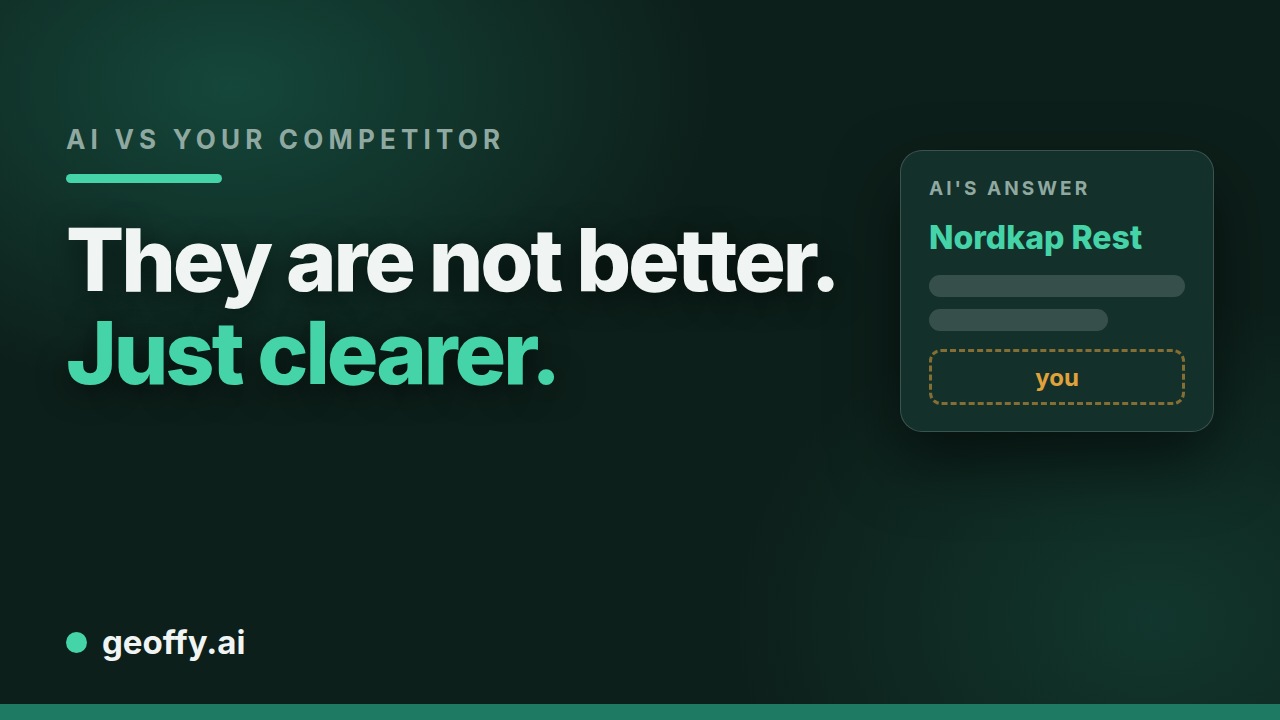
The better product should win. Right now, the better data does. Close that gap before your competitors do.
Want to see where you stand today? Get your free GEO Score.